Thursday, June 11, 2020

The Jewish Diaspora

 A Brief History of the Jews

What country do you live in? How long have you lived here?  Where would you live if you didn’t live here?  Today we will be learning about a people who did not have a country. There was no place on the map for them to call home but they still identified as a nation. They lived in different places throughout the earth but constantly were bound together by their beliefs and traditions. These people were the Jews.

The Jews have been called many different names over the years.  We called them the Hebrews then the Israelites and then finally the Jews.  A long time ago, the Jewish people wandered in the wilderness for forty years to a land called Canaan.  Canaan is where modern day Israel is found.  This area is still considered today to be the ancestral home of the Jews. 

During the years in Canaan there were many kings. They built a beautiful temple to worship in. They had many traditions that were unique to them. They also lived in a time and in a place where kings and kingdoms would often try to conquer each other. Eventually, the kingdom was split into the northern kingdom of Israel and the southern kingdom of Judah.  Jerusalem was the center of Judah. Both kingdoms faced many dangerous enemies.  

After several hundred years, the ruthless kings of Assyria invaded and overwhelmed the northern kingdom and carried away many of the people captive into Assyria. The southern kingdom of Judah survived for another 150 years until the kingdom of Babylon conquered it.  The Babylonians destroyed the temple and took the people captive into Babylon.  

After that, the Jews had many different rulers. The Persian Empire, under the direction of King Cyrus, conquered and destroyed the Babylonians.  Even though Cyrus wasn't a Jew, he was respectful of their religion and beliefs so he allowed the Jewish people to return to Jerusalem and rebuild their temple.  He allowed them to practice their religion and he protected them from enemies.  With this new found freedom, the Jews began to migrate all over the Middle East but continued to maintain Jerusalem as their center of worship.  

After about 200 years under Persian rule, a Greek named Alexander the Great came through overthrowing empires and expanding his own empire over much of the Middle East.  After the death of Alexander, the Jews were ruled by other Greek-speaking kings for another 200 years. During this time, Jewish people still fought to keep their religion and their traditions. One example of this is when one of these kings didn't like the Jews and wanted their money from the temple.  A man named Judas Maccabeus and his brother fought off the king and won!  They purified the temple and are still celebrated every year in a festival called Hanukkah.   

 Judas Maccabeus died in the battle but his family ruled Israel for several generations until the Roman Empire defeated them. They burned the temple and took the Jews captive.  

The Jews were under Roman rule for hundreds of years. They didn’t like being controlled by the Romans, and they often fought for their freedom. They never won.  

After one of these big rebellions they finally thought that they had won and had driven the Romans out of their lands and their city, Jerusalem.  But the Romans returned with a huge army and took control back from the Jews and continued their rule.  The son of the emperor, named Titus, succeeded in winning back the lands from the Jews.  He later became emperor and after he died, his brother, Domitian wanted to honor him with a monument made of stone. He built an arch and carved pictures of the overthrow of the Jewish people onto it. It still stands today and has become a symbol of all the difficulties and moving around that the Jewish people have gone through.

This wasn't the first time the Jews had rebelled against Roman rule and the Romans were tired of it. They decided that if they scattered the Jews all over their empire, the wouldn't be able to revolt any more.  Worship in the temple was very important to the Jewish people, but their temple has been burned and they were scattered far away from Jerusalem.  But they stayed strong. They continued reading the Torah and started worshipping in small local temples called synagogues.  

For hundreds of years the Jews lived all over the world, worshipping in their synagogues and practicing their religion and their traditions. They ended up in England, Spain, France, Russia, Italy, Egypt and more countries.  This scattering of the Jews is called the Diaspora. They learned the languages and the customs of the people who lived around them. But even though they were English, Spanish, French, Russian, Italian and Egyptian, and all other nationalities, they were still Jews.     

In World War II the Jews were singled out and under attack once again.  Hitler hated Jewish people and blamed them for Germany losing World War I. He considered Jewish people to be less than human. Hitler also believed in the superiority of the Aryan race. He wanted to use Darwinism and breeding to create a race of perfect people. Hitler wrote in his book Mein Kampf that when he became ruler he would rid Germany of all the Jews. Not many people believed he would really do this, but as soon as he became Chancellor he started his work against the Jews. He made laws that said Jews had no rights. Then he organized attacks on Jewish businesses and homes. 

On November 9, 1938 many Jewish homes and businesses were burnt down or vandalized. This night was called the Kristallnacht or "Night of Broken Glass". During World War II when the Nazis would take over a city in Europe they would force all of the Jewish people into one area of town. This area was called a ghetto and was fenced in with barbed wire and guarded. There was little food, water, or medicine available. It was also very crowded with multiple families sometimes sharing a single room to live in.  All Jewish people were eventually to be brought to concentration camps. They were told they were relocating to a new and better place, but this was not the case. Concentration camps were like prison camps. People were forced to do hard labor. The weak were quickly killed or died of starvation. Some camps even had gas chambers. People would be led into the chambers in large groups only to be killed with poison gas. The concentration camps were horrible places. Many Jewish people hid from the Nazis during World War II. They would hide with non-Jewish families. Sometimes they would pretend to be a part of the family and sometimes they would hide in hidden rooms or in a basement or attic. Some were able to eventually escape across the border into a free country, but many hid for years sometimes in the same room.

After World War II most nations agreed a Jewish homeland should be set up. On November 29, 1947, the newly founded United Nations proposed that Palestine be divided between Arab Muslims and Jews. The state of Israel was proclaimed on May 14, 1948 finally giving the Jews a home.  Many Muslims did not want to give up land that they considered theirs that was given to the Jews. Fighting broke out between the two sides, resulting in the Arab-Israeli War of 1948–49. During the conflict Israel gained more land than what the United Nations had provided, driving 800,000 Arabs from their homes. The war set the stage for many decades of fighting for control over the Palestine region. The conflict continued into the 21st century.

During all of the years of turmoil, the Jewish people kept their beliefs. They believed that they should treat people kindly. They developed many traditions to help them to keep their beliefs strong. Even though they lived all over the world, the Jews stayed true to their religion and their traditions even though it was hard.  We can learn a lot from the Jews about loyalty and tradition and staying true to what we believe in. 


Thursday, April 23, 2020

Saturday, April 18, 2020

April 2020 Leadership Academy

APRIL 2020

APPRENTICE
Paperback The Success Principles for Teens : How to Get from Where You Are to Where You Want to Be Book
Well, it's our last Leadership class for the year.  Let's:

  • finish up the Success Principles book (chapters 18, 19, 20 & the conclusion).  
  • Then I'd like you to skim back through the book and your notes from both last year and this year's leadership classes.  
  • Please choose 5 principles out of all we have talked about that you are willing to put into practice in your life in the coming months and years.  
  • Make some kind of visual reminder that you can put in your room so you'll see it and remember the things you are thinking about.  You don't necessarily have to do them all at once, but they can be leadership goals to strive for in your life.  
  • Bring it to the discussion to show us what you have come up with.  


As we've been studying King Benjamin in Come, Follow Me this week can you see the similarities between his address and our most recent General Conference?  Did you notice that (as a world, church, society) we were gathered as families facing the prophet more than maybe ever before?  
  • Did you feel the elements of Synergy?  Did you recognize it?  Can you think of one word that summarizes the way you felt the Synergy of the Spirit?  What does that word mean to you?  Bring your thoughts to class for the discussion.
  • Read Mosiah 4: 3-4 and make a list of what the people did after the "spirit of the Lord came upon them".  Did you experience anything similar while watching Conference?
  • In verse 4 King Benjamin says, "...I would again call your attention, that ye may hear and understand the remainder of my words."    Do you think that sometimes God feel this way towards us, He needs us to pay attention so that He can talk to us?
  • Review the talks from Conference, either from your notes or a quick review found here onlineWhat personal revelation did you receive in Conference?  What is the message you felt Christ gave you?  This is meant to be your theme for the next 6 months.  
    • What if you don't think you got any personal revelation at Conference?  Review your favorite talks with a prayerful heart this week and specifically ask God what His message is for you.  Then listen.  (Psalm 46:10)
  • Read Mosiah 1:4.  How did Father Lehi "remember these things"?  
  • Once you know what your message is for the next 6 months, write it down and hang it in a place you'll see it every day.  Just like Lehi, if it's not written down, we just don't remember.  
  • If "synergy" means the whole is greater than the individual parts, how is that true for you when you are synergized with the Lord?  Journal on this for 10 minutes.  How can you be more in line with God, more synergistic?  If don't remember what synergy looks like, review that section in "7 Habits for Teens" 


JOURNEYMAN

Read: The Tuttle Twins and the Education Vacation


Write a paragraph discussing the difference between seeing children as clay and as seeds.  Why do you think it makes a difference in how educators see their students?  

Think about your own experiences with education (public school if you've been there, homeschooling, co-ops, etc.).  Come prepared to discuss your views about education and what you can do to enhance your own, as well as the education of your future children.  


Saturday, March 14, 2020

March 2020 Leadership Academy

March 2020 Leadership

Apprentice
Paperback The Success Principles for Teens : How to Get from Where You Are to Where You Want to Be Book

1.  Read Chapters 16-18 in Success Principles for Teens.

Ch. 16
Make a list of the 5 people you spend the most time with.  Answer the following questions:
  • 1. When you are with these people, do you generally feel a positive or a negative energy?  
  • 2. What do you think they would say about the energy that you bring to that relationship?
  • 3. Do your friends encourage you and help you become a better person?
  • 4. Do you do that for them?
  • 5. Make a goal for one day to only say positive things and not to complain.  Keep track of how well you do and write about your experience. 

Ch. 17

This week, keep a running list of the things you do right.  You can get some ideas from the stories in this chapter.  

Chapter 18 

1. List some challenges that could arise in your life because of the coronavirus.
2. What are some ways that you can overcome them?


2.  Are you excited for General Conference?! I know I am!!!

Here’s a talk I found in the 1990s from Elder Nelson. Does he look younger now or then??


  • I feel as if the heavens opened up and angels sang hallelujah!  This is the talk! For us! Today! Look for ways the Spirit is inspiring you to prepare for the upcoming General Conference!
  •  Stephen R Covey speaks of Seek First to Understand, Elder Nelson in 1991 referred to it as Listen to Learn.  
  • In your CPB, write what most inspired you in Listen to Learn. 
  • Write down 2 ways you will follow, then Elder Nelson’s council as you prepare to Listen to Learn the Lord’s will for you in this upcoming General Conference. 

3. Watch the video of the allegory of the Olive tree in this weeks Come Follow Me, how does Listen to Learn benefit or apply to missionary work?


  • Write answer in common place book. 

4. Ponder...


  • According to Elder Anderson, does listen to learn mean the same as agreeing?
  • After reading this General Conference talk, write down a reply you might give to someone who asks you to explain why you believe in Christ and/or Joseph Smith. (1-2 sentences each). 

Journeyman
The Tuttle Twins and the Fate of the Future
Read The Tuttle Twins Fate of the Future

Write a paragraph that summarizes the ideas in the book. See the glossary on the last page to give you some ideas of things to talk about. Then answer the following question:  Can a peaceful society ever exist and last that doesn't use coercion?  


Thursday, February 6, 2020

February 2020 Leadership Academy


APPRENTICE

Study/Learn

Do all the following:

Read these articles:
Read these talks by Pres. Benson:
Read chapters 13-15 in Success Principles for Teens.  Write down 3 points that stood out to you from each chapter.

Write out your answers to the questions at the end of Ch. 13 on pp. 150-151.

Know/Understand

Answer these questions in your commonplace book:
  • How is the Lord thinking win-win?  Site 3 examples
  • How does the Spirit of the Lord support those who follow Him in the midst of trials?  Write about 1 example
  • How did the Lord begin preparing His people through President Benson for our day ?
  • How has the reading of the book of Mormon influenced your parents?
  • What are you gaining from the book of Mormon study this year?  Site three examples of win-win 
Become/Serve


This quote sums up their relationship:

"In her effort to help him do so, [Flora] joined him in putting God first."

How is this thinking win/win in their relationship with each other and with God?  Journal for 15
minutes about how you can be win/win in all of your relationships.  What are you already doing well?  What can you do better?  Choose 1 thing and work on it this week.


JOURNEYMAN

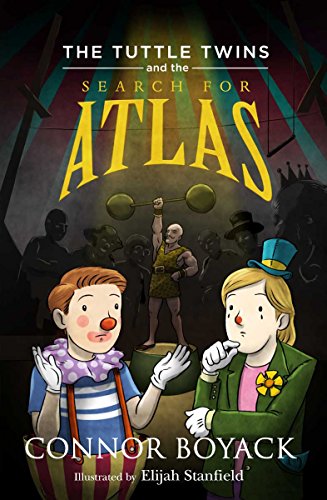
Read the Tuttle Twins and the Search for Atlas

The Tuttle Twins and the Search for Atlas: Connor Boyack

Write down three examples of Socialism that you see happening in the United States. Feel free to Google it and/or ask your parents for ideas.

Read The Tuttle Twins and Their Spectacular Show Business


Also, watch minutes 1:00-13:00 in this video: https://www.youtube.com/watch?v=jaQHN_tUyFk

Kids Pitch Brilliant Products to the 'Shark Tank' Tycoons!


Think of a problem that could be solved with a new invention, or something that already exists that could be improved.  Design your idea on paper and prepare a one-minute pitch for our Shark Pond judges.  Bring a prototype, or at least a drawing to show them. 

Sunday, December 15, 2019

January 2020 Leadership Academy


APPRENTICE

Read chapters 9-12 in Success Principles for Teens.


Think about and answer the following as you go through the chapters:

1. Ch. 9: Think of what you would like your life to be 5-10 years from now.  See it in your mind. Write a page describing the picture you have created of your life. Talk about it as if you are already in it. Describe your job, family, house, etc. Have fun with it and come prepared to share it with the class.

2. Ch. 10: What is one goal that you would like to accomplish this year? What are some roadblocks that could get in your way?  What will you do to overcome them?

3. Ch. 11: What is an area of your life where fear stops you from accomplishing something that you would like to do?  How might you work to overcome that fear?

4. Ch. 12: Think of something you want to do in your life (it could be a profession, hobby, a talent, etc.) and find out more about it in one of the following ways: 1) interview someone who is already doing it; 2) read a book about it to find out more about it, 3) watch a video of someone who is already doing it and see what you can learn about it.  Find out what it would take to accomplish it and write a rough draft plan of how you could get started on it. 


JOURNEYMAN

Economics

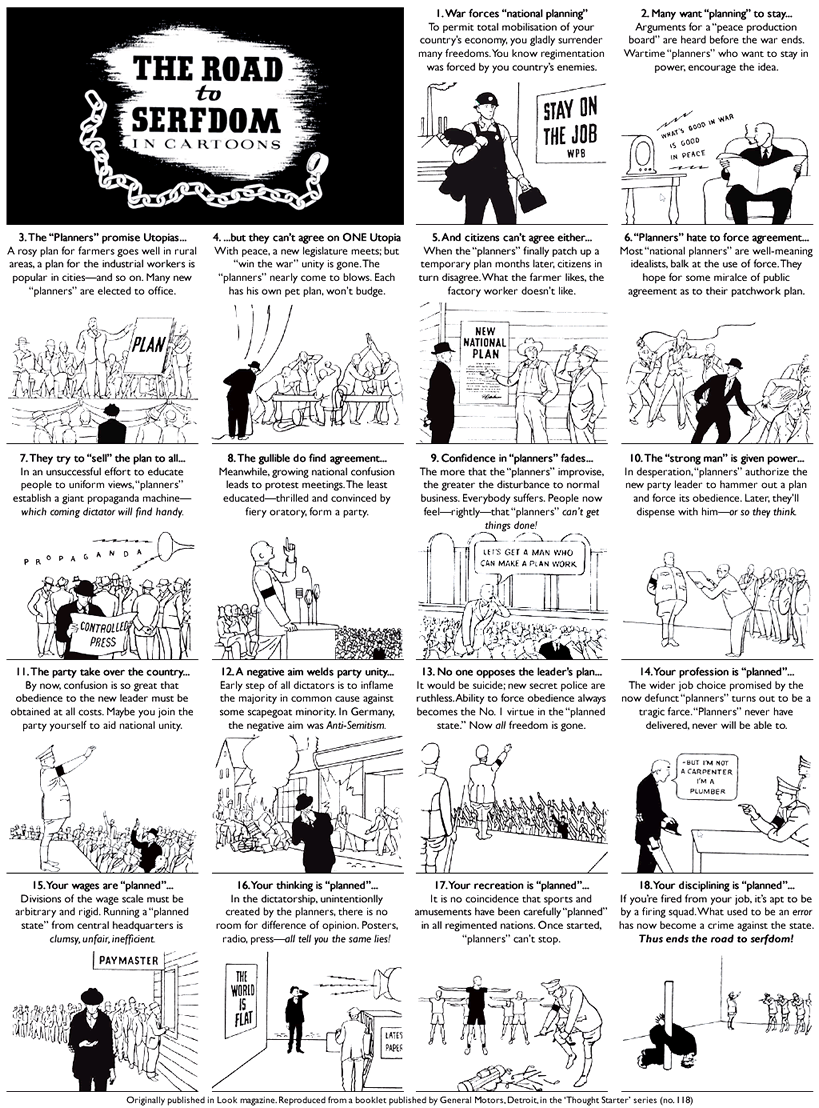
1.  Read The Road to Surfdom and also
The Road to Serfdom in comics:  http://sqapo.com/TheRoadToSerfdom.png (you might want to copy this one into a document and print it out).

Paperback The Tuttle Twins and the Road to Surfdom Book

Write your answers to the following questions:
1. In a few sentences, summarize what you think Hayek was trying to say.
2. Do you think it's possible that Hayek could be right in his assessment? 
3. Have we seen these things happen in our world? In our cities?

2.  Read The Tuttle Twins The Golden Rule.  Answer the discussion questions on page 60.


MASTERS

Study/Learn

1 - Read: “Laddie” by Gene Stratton Porter.  Mark passages that you like and would like to remember.

2 - Research the author, Gene Stratton Porter.  (See “tools” on the blog).  How has your interpretation of the book changed by knowing about the author?  Did it change your understanding at all?  Did she write any other books?  Have you read any of them? Be prepared to share what you learned with the class.

Know/Understand

Think about these questions as you read and come ready to discuss:

  • How can we love those that are different from us? What could the Stanton’s have done differently with their relationship with the ‘Princess” family?
  • Why is Laddie so determined to have the ‘Princess’? Why does she avoid him? What does he do to try and win her? What principles of courtship did you find?
  • What makes father’s prayers so powerful? How can we connect more to God?
  • What principles of good family life do we find?  Do we see any family life principles we might want to avoid?
  • Little Sister asserts early on in her narrative that she was not wanted. Is there evidence of this? What evidence to the contrary does she provide along the way?
  • “Really you have no business to ask God to take care of you, unless you know you are doing right.” (p. 6) Do you agree or disagree? Are there exceptions?
  • “Do you know that being a stranger is the hardest thing that can happen to any one in all this world?” (p. 16) Why does she feel this is so? Do you agree? Why or why not?

Monday, November 4, 2019

Nov. 2019 Leadership

APPRENTICE:

The Success Principles for Teens:
Read chapters 6-8

Ch. 6: Using the chart on p. 67, rewrite at least two of your goals to be more empowering,
as defined in section 6.1.  


Ch. 7: Look at your goals and write down any negative thoughts you have as you think
about achieving them. Rewrite each of those statements as positive affirmations that you
can say to yourself to help you stay positive as you work to accomplish your goals.  


Ch. 8: Update your vision board (or make one if you haven’t got one yet) to reflect your
current goals. Spend a few minutes each day visualizing yourself achieving the goals,
putting as much detail as you can into your visual movie. Bring a picture of your vision
board to show us.


Read the following:

  • Abraham 1:1-16
  • Moses 1:1-28

Choose one of the following and bring it to class to share:

- Artistically Prepare a quote to share by Dale Carnegie
- Prepare a FHE lesson from one of the recent General Conference talks or President
Nelsons Gathering of Israel talk regarding beginning with the end in mind. Choose
opening hymn and closing hymn as well.

- Come prepared to share a vision board experience. Share with us what you choose.
Why you choose it. What did you think to say to yourself when you saw it.
What occurred in order for your vision to become a reality? Share the experience
of receiving what you envisioned.

Accountability: We will ask to see the written work and a picture of your vision board.


JOURNEYMAN


Read The Tuttle Twins: Creature from Jekyll Island  


Watch this Video called What Is Inflation? https://www.youtube.com/watch?v=HGPBTEugNnI

Answer the following questions:


1. Why do we use money? 
2. How does inflation harm people who depend on their savings, such as retired senior citizens?
3. Could you obtain everything you needed strictly by bartering with others? Could you do it for
a single week? 
4. Why does the government mandate that everybody use its fiat currency? 
5. Would fiat currency be used if it was subject to competition by other currencies that people
voluntarily chose to instead use in their exchanges? 
6. What would the world be like if things cost the same today that they did for your grandparents? 
7. How can each of us fight the creature to protect our hard-earned savings?


Read the Tuttle Twins: Food Truck Fiasco

The Tuttle Twins and the Food Truck Fiasco

Do the following activity:


Mayor for a Day


Imagine that you were elected Mayor of the city or town in which you live. Let’s even
pretend that the city council was willing to vote for whatever law you proposed! Think of
five laws that you would pass, and explain to a sibling or parent why you think they’re a
good idea.
Maybe they have to do with garbage collection, or fireworks, or swimming pools, or
lemonade stands, or speed limits. Perhaps you want to change the law about owning
chickens or the minimum wage.
But be careful! You should have a very good reason why you think your idea should be
a law. Will it hurt anybody? Is it a fair law? Write down your answers to these questions.

Come prepared to discuss the following questions:


1. Why does competition need to be fair?
2. What are other historical or modern examples of
protectionist laws that favor one industry or business
over another?
3. Why are people tempted to get the government
to pass laws that help their business?
4. What can we do to help make sure that the
law treats all business fairly?
5. What types of stories do reporters like to highlight?
6. Should the police officers have enforced the
unfair law that required the food trucks to leave?
7. Is it okay to violate an unfair law?
8. What types of businesses can teenagers
or your adults start with only a small
amount of capital?


MASTERS


Study/Learn


1 - Read: “Stargirl” by Jerry Spinelli.  Mark passages that you like and would like to remember.

2 - Research the author, Jerry Spinelli.  (See “tools” on the blog).  How has your interpretation of the book changed by knowing about the author?  Did it change your understanding at all?  Be prepared to share what you learned with the class.

Know/Understand

CHOOSE ONE OF THE FOLLOWING:
  • In “Stargirl” we have many characters who begin with the end in mind and live true to themselves and many characters who do not.  Pick a character that is living begin with the end in mind and one who is not and compare and contrast them.  Think about the following questions:  Is this person happy?  Would they be more or less happy if they we/weren't being/not being true to themselves?  How would their life have been different if they did/didn't live that way? Etc.  Journal about the differences in personality and what you have learned from analyzing these characters.  
  • Who do you think is the happiest person in this novel?  Why?  Journal for 20 minutes on what makes that person happy and how you can find more happiness in your own life by emulating some of that person's characteristics.  


We will be reading novels for Master class for the rest of the year.  They are all lengthy (but worth it!) and you won't want to wait until the last minute to read them.  Here is a list of what we'll be reading so you can use your Christmas break to get ahead.  Mark your book well and you will remember what you read, even if it's months in advance.
  • January 2020 - "Laddie" by Gene Stratton Porter (401 pages)
  • February 2020 - "Gifted Hands" by Ben Carson (224 pages)
  • March 2020 - "Christy" by Catherine Marshall (512 pages)
  • April 2020 - "The Lonesome Gods" by Louis L'Amour (576 pages)